Polygon Runway: Scaling Through Meta & YouTube

Tomas Komarek
March 31. 2026

9000+ Paying Customers From Scratch
scaling revenue with Meta & YouTube for a high-ticket product
COMPANY

industry
Creative software education
Collab
7+ years
stage
Bootstrapped
I don’t see Tomas as an outsourced freelancer but as an integral part of my businesses. He truly takes ownership, operating as if it’s his own investment.

Roman Klco
Founder of Polygon Runway
Situation
Selling premium in felt almost impossible, especially in the US, market crowded with 20x cheaper, low-commitment options.
Goal
Drive consistent sales without discounting, using paid acquisition to make prospects understand the value before they ever saw the checkout page.
Results
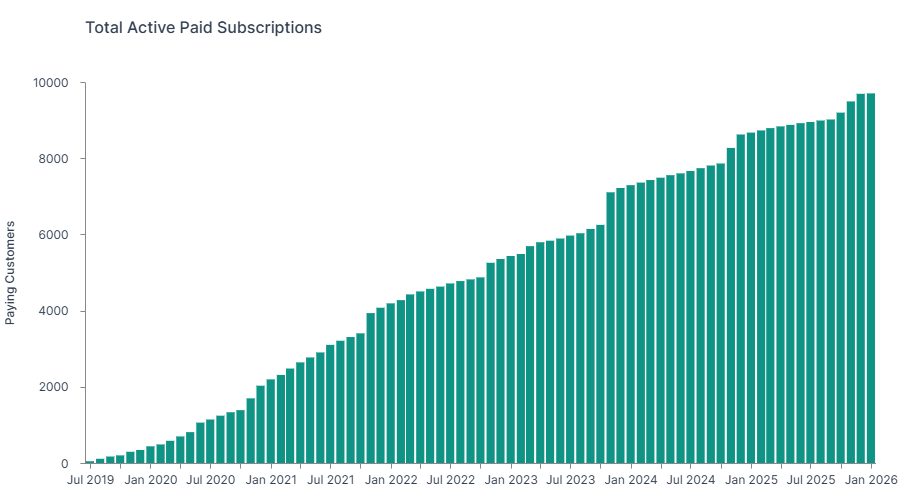
- 9,000+ paying customers acquired
- $1M+ in revenue generated
- 500,000+ YouTube subscribers built alongside paid growth
Are you selling a premium SaaS in a market full of cheap alternatives?
Roman, founder of Polygon Runway, faced this exact challenge early on—competing against 20× cheaper alternatives. Today, Roman has 9,000+ paying customers and serves brands like Google, Nvidia, and Waze.
Separate Channels. One Connected Funnel.
Treat each channel separately — but connect them through a lead-driven funnel.
The Real Challenge
This wasn’t an impulse buy.
The product required education, proof, and trust — especially at a premium price. And burning cash “to train the algorithm” wasn’t acceptable for a bootstrapped founder. New project with very low traffic so paid was the main channel to drive it.
The Outcome
This approach:
- Enabled scaling without VC funding
- Improved blended CAC efficiency despite a 20% worse last-touch PPC CAC
- Grew YouTube and Instagram audiences alongside revenue
The Solution
Custom Funnel. Clear Objectives. Revenue Follows.
For premium SaaS products with long buying cycles, optimizing only for purchases is slow, and expensive. Early on, there simply isn’t enough volume — which leads to wasted spend of “waiting for the algorithm to learn.”
My approach flipped that logic.
We set clear, measurable objectives at the top of the funnel — not as vanity metrics, but as early indicators of revenue. These objectives gave us:
- Faster feedback loop
- Enough volume to optimize quickly
- Confidence before increasing spend
Paid ads were used to create demand and learning, not to force immediate conversions.
Why This Works
Upper-funnel signals are:
- Easier to track than purchases
- Available in higher volume
- Much faster to validate what message resonates
But they only matter if they’re connected to revenue.
By linking early engagement and email signups to eventual purchases, we could tell which messages:
- Attracted serious buyers
- Justified a premium price
- Were worth scaling
This created framework for creative analytics.
Turning Strategy Into a Scalable System
1. Demand Creation (YouTube + Instagram)
- Ran non-product showcase ads to demonstrate outcomes, not features
- Optimized for engagement, intent, and lead capture
- Built engaged audiences and email lists instead of forcing checkout events
2. Revenue Validation (Email + Retargeting)
- Emails were linked to actual purchases
- This revealed which hooks and value propositions converted into revenue, not just clicks
- Email and retargeting were used to finish the sale
Paid ads showed it.
Email converted it.
The Execution
What made this possible:
- Tracking: Implemented a custom script to decode purchase information from the URL and pushed a data layer from GTM to distribute purchase details to each marketing platform.
- Optimization: Hybrid conversion signals combining demo interest with full-price intent – giving smart bidding usable data early
- Meta: Creative analytics framework to identify winning hooks and propositions
- YouTube: Format-specific creative testing – ads optimized through iteration, not assumptions
No blind scaling.
Conclusion
What we built wasn’t just campaigns — it was a growth system:
- Scaling across multiple paid channels (9,000+ paying customers)
- 500,000+ audience built alongside revenue
- Premium positioning that attracted brands like Nvidia
The lesson?
Strategy-first media, optimized on early signals, beats cheap alternatives and you don’t need to burn cash to “teach the algorithm.”
You need someone who can blend strategy, tracking, experimentation, and ruthless execution.
Tomas doesn’t follow the typical agency playbook, where they ask for your budget and creatives, then just run with it. His method is different—and honestly, I didn’t expect that. He digs into the business itself, searching for insights that most overlook. And test it.
Yes, many agencies test and experiment, but it’s very rare to stumble upon big outlier without this business approach.
Roman Klco
Founder of Polygon Runway
GET INSPIRED
Case studies to guide you

Sanity.io: From Seed to $85M in Series C
Are you a B2B SaaS marketer drowning in sky-high CPCs and channels that don’t convert? Sanity felt the same pressure early on. Today, they’re a category leader with a global enterprise customer base. Part 1: EARLY-STAGE GROWTH Search was bleeding money. Users didn’t stay. Growth stalled. The Challenge Sanity just founded and faced brutal competition: Adobe. Salesforce. Contentful […]

Deepnote: How I Cut CAC by 72% and 2.5×’d Paying Customers
Unprofitable paid channels? or CAC too high?Deepnote was right there — and they needed paid to start paying back fast. After taking over their paid acquisition, the turnaround came quickly:72% lower CAC while growing above the plan: 158% more paying customers from paid in the first year only. Approach Learning from the Past The first […]

Rouvy: 20% Lower CPA in 30 Days Without Reducing Volume
Do you run paid acquisition with a senior in-house team and still ask:“What can we realistically improve — even by a few percent?” When you’re spending seven figures on media, a “small” improvement can mean hundreds of thousands in incremental revenue. That was exactly Rouvy’s situation. They didn’t expect breakthroughs — just marginal gains. What happened instead? The […]